

Rachel Hannam
Complexity and the limits of medicalisation
Confusion and ambivalence about gender and sexuality have long been recognised as common features of adolescent development. Erikson’s stage of identity versus role confusion conceptualised this period as one in which exploration, complexity, and uncertainty were expected (Erikson 1968). What has changed is not the existence of distress itself, but the interpretive framework now applied to it.
Increasingly, adolescent distress is absorbed into a medical model whose primary tools are diagnosis, pharmaceuticals—including hormones—and surgery. In this process, psychosocial and developmental complexity is collapsed into medicalised and politicised labels, resolving uncertainty prematurely rather than engaging with it. Insights from systems thinking caution against collapsing complex phenomena into simple explanatory narratives, particularly in contemporary adolescence, where identity formation occurs within dense digital and social ecologies layered with meaning.
As Meadows (2008) notes, simplifying complicated problems can be helpful but simplifying complex problems always results in errors. Over-simplification distorts causality in complex systems, reductionism obscures feedback loops, and interventions based on oversimplified models cause harm. A historical parallel can be drawn with the mid-20th century adoption of prefrontal lobotomy, which was promoted through moral urgency, institutional pressure, and genuine belief in benefits despite limited evidence and severe long-term harms. The lesson here is not equivalence, but structural similarity: good intentions do not prevent harm when uncertainty is foreclosed and irreversible interventions outpace the evidence.
Cultural shifts that demand ethical scrutiny
Several broader cultural shifts recur across researcher, clinician and family accounts. The first is the sharp rise in adolescent presentations of gender distress since approximately 2012, coinciding with smartphone and social-media saturation and occurring disproportionately among adolescent girls. This increase parallels broader rises in adolescent anxiety and depression, particularly among females (Haidt 2024).
A second shift followed changes in psychiatric classification and cultural framing. After the publication of the Dutch protocols for paediatric medical transition (de Vries 2014) and the removal of gender identity disorder from the Diagnostic and Statistical Manual (the American Psychiatric Association, 2013), gender-related distress was increasingly treated as a natural variation, often analogised to same-sex attraction.
Yet natural variation does not typically require irreversible medical intervention. Across cultures that recognised gender-variant social roles, rejection and modification of sexed anatomy was not necessary for social recognition.
A third observation concerns the accelerating pace of medical transition. Contemporary clinical guidelines no longer universally require extended periods of real-life experience or prolonged psychotherapy prior to initiating gender-affirming hormones. In some settings, adolescents aged 18—or younger—can begin hormone treatment within months of first seeking care, and surgeries soon after.
Parents repeatedly echoed this shift when describing rapid access to medical transition by their young adult children in Australia, New Zealand and North America. The removal of prolonged eligibility requirements in the 8th edition of the Standards of Care issued by the World Professional Association for Transgender Health and other protocols suggests the confluence of moral urgency and broader social pressures, which simultaneously reduce opportunities for maturation and therapeutic exploration.
Counter-arguments and ethical responses
A common counter-argument holds that affirmation is ethically necessary to reduce suicide risk and that deeper exploration constitutes harm. This claim rests on contested assumptions. Longitudinal data do not demonstrate elevated suicide mortality attributable to non-affirmation. A Finnish cohort study found no increased suicide mortality among adolescents referred to gender services compared with matched controls (Ruuska et al. 2024). Distress is in fact better understood as reflecting broader psychiatric vulnerability.
Another counter-argument asserts that biological sex exists on a spectrum. This claim conflates disorders of sex development with sex itself. In mammalian biology, sex is organised around a bimodal reproductive system; intersex conditions represent atypical development within that framework and do not constitute additional sexes. While gender identity varies widely, this variability does not negate binary sexed embodiment or justify medical alteration of healthy bodies in the absence of pathology.
More recent counter-arguments also emphasise individual autonomy: “It’s your body.” While autonomy is an important ethical principle, appeals to autonomy in this context may be grounded in extra-factual beliefs—that is, metaphysical or philosophical claims about unobservable realities, such as the existence of a core gendered self or essence that exists independently of the body and must be aligned with social and medical affirmation. While such beliefs may provide existential meaning, they are not empirically testable and, when emotionally overinvested or socially amplified, function as overvalued ideas that privilege self-assertion over caution and reduce tolerance for uncertainty (Schroeder 2021).
Where decisions are irreversible and made under conditions of developmental vulnerability and psychological distress, an emphasis on autonomy overlooks what social psychologists have known for decades about the influence of social pressures and group belonging (Asch 1955; Cohen 1972).
These dynamics arise because humans are motivated to reduce cognitive dissonance, are highly responsive to social cues, and seek acceptance within social groups (Asch 1955; Festinger 1957). In such contexts, exploration and mindful delays function not as constraints on autonomy, but as ethical safeguards.
Evidence also suggests that social transition is not a neutral act but a significant intervention that alters developmental trajectories and increases the likelihood of medical treatment (Cass 2024). Zucker (2020) has described a “lock-in effect” whereby early social transition can consolidate an identity that might otherwise have remained fluid, rendering later lifelong medicalisation more likely. These iatrogenic effects—induced unintentionally by the system—can operate clinically, socially, and culturally.
Clinical ethics and exploratory therapy as skilful care
Viewed through a clinical ethics lens, the suppression of exploratory psychotherapy raises serious concerns regarding non-maleficence, beneficence, autonomy, and informed consent.
Exploratory psychotherapy is still mis-characterised as passive, or even harmful. Indeed, at the time of writing, the Wikipedia entry on gender exploratory therapy defined it as a type of conversion therapy (see Gender exploratory therapy n.d.). In reality, these approaches are ethically and clinically distinct, with conversion therapy aiming to change sexual orientation, whereas exploratory therapy is a neutral process that investigates the psychological roots of beliefs and distress. As one of my psychology colleagues noted: “All therapy with all clients should be exploratory, by definition.”
Non-maleficence—avoiding long-term harms—requires playing the long game, exercising caution and curiosity about potential blind spots when risks are uncertain and potentially irreversible. These decisions are made in moments that young people and their parents will remember for the rest of their lives. Acting in their best interests requires doctors, teachers and therapists to hold attention on the child’s long-term wellbeing, not just short-term distress reduction.
Respect for autonomy depends on non-coercive framing and recognition that identity development is extremely dynamic in adolescence and emerging adulthood. Ethical exploratory therapy is active, skilled, and demanding. It prioritises patience over panic and formulation over protocol, strengthens reflective capacity, and tolerates uncertainty. Crucially, it does not presume a predetermined endpoint. It allows for multiple developmental trajectories, including resolution without transition, or later transition in adulthood, undertaken with much greater stability and decisional capacity.
Practical guidance for clinicians to undertake this work already exists. Ayad et al. (2022), in A Clinical Guide for Therapists Working with Gender-Questioning Youth, outline a developmentally informed approach emphasising curiosity and comprehensive assessment; attention to anxiety, trauma, neurodevelopmental differences, family context, and social influences; building distress tolerance; and showing support for exploration without presuming outcomes.
These frameworks demonstrate that ethical, non-foreclosed care is neither novel nor theoretical but has long been part of responsible clinical practice. As several parents I interviewed observed, when a young person’s mental and social wellbeing improved, their concerns or distress around gender often diminished.
For many children and adolescents, a trans identification may also function—often unconsciously—as an attempt to fulfil unmet developmental needs for care, attention, inclusion, or significance.
In complex family or peer environments where a young person feels invisible, sidelined, or emotionally unsupported, identity can become a language for distress and a way of eliciting care that they do not yet know how to ask for directly. Therefore, a strong focus on developing psychosocial skills and global mental health support is essential.
Of course, this does not preclude respectful and open discussions about sex and gender. Two examples of exploratory tools may be clinically useful. One is the freshwater stream analogy, shared with me by a colleague. We use it to explore beliefs about biology, sex, and embodiment. A therapist might ask: “If you were responsible for caring for a freshwater stream, but preferred swimming in saltwater and had access to abundant salt, would you change the stream?” Most patients respond no. Reflecting on why allows consideration of how introducing a single variable can impact an entire ecosystem over time.
Construing the body as something precious, its own ecosystem, invites reflection on how medical interventions such as oestrogen or testosterone may affect the interconnected systems of the body, without asserting a conclusion.
Another approach draws on Socratic questioning and metacognitive inquiry to explore how deeply held beliefs are formed and maintained. When I use this technique, my aim is to expand the conversation and explore deeply held beliefs with epistemic humility. The focus is not on changing beliefs, but on supporting self-reflection and evaluating confidence in one’s reasoning. A therapist might ask questions such as: “What does ‘wrong body’ mean to you personally?” or “When did this explanation first start to feel true?” Exploration may also include:
• What experiences helped this belief take shape?
• Were there moments when it felt especially relieving or clarifying?
• Have there been times when it felt less fitting, even briefly?
• Does part of you feel this explains everything, while another part remains unsure how permanent it is?
• How confident do you feel about the reliability of this belief?
By normalising ambivalence, slowing decision-making, and supporting mentalisation and emotional regulation, psychotherapy functions not as a barrier to care, but as an ethical safeguard—particularly during periods of developmental vulnerability.
Conclusion: From moral certainty back to ethical care
Writing this as both a clinician and a mother myself, I remain acutely aware of how little certainty is available when a child is suffering, and how much responsibility lies with parents and those entrusted to help them traverse this complex and layered terrain.
What families so often encounter is not an absence of compassion for young people’s suffering, but an absence of clinical openness. Vital questions ordinarily central to ethical psychotherapy concerning development, comorbidity, uncertainty, and reversibility are treated as impediments rather than necessities. The suppression of exploratory psychotherapy does not require a conspiracy to explain it. It can be understood as the predictable outcome of a convergence of moral urgency, institutional risk aversion, professional conformity, epistemic injustice, and medicalised responses to complexity—none of which confer ethical legitimacy.
Ultimately, this debate is not about whether distressed young people deserve our love and support, but whether current practices adequately protect them when our knowledge is incomplete and consequences are lifelong. Ethical psychotherapy remains essential to that protection. Its marginalisation represents not progress, but a retreat from the core principles of care, humility, and responsibility that psychological and medical practice are meant to uphold.
Dr Rachel Hannam is a Brisbane-based psychologist.
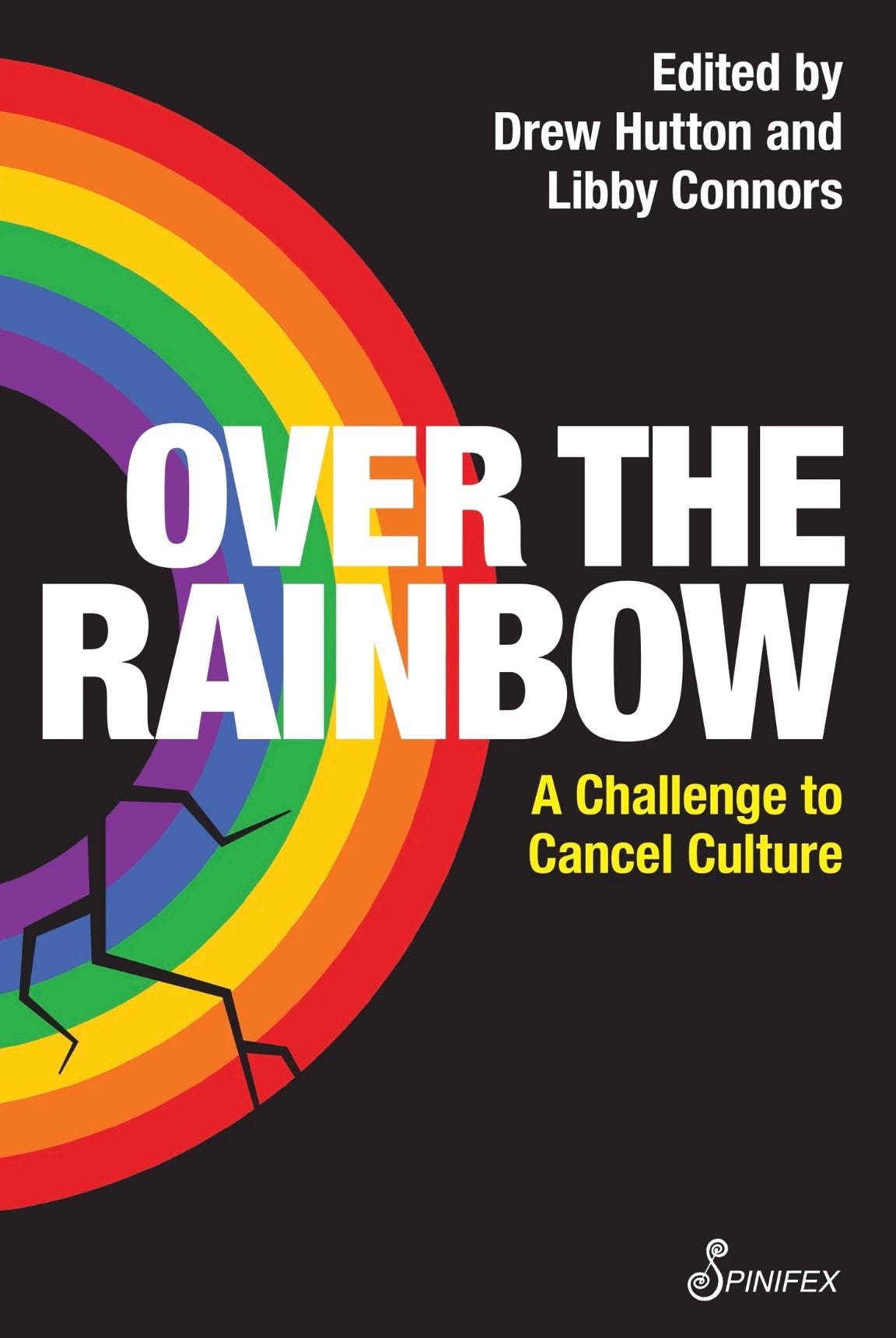
This article is a book extract from Over the Rainbow: A Challenge to Cancel Culture published by permission of Spinifex Press. Edited by Drew Hutton and Libby Connors, the book is to be launched on September 17 by Sall Grover, a prominent Australian critic of gender ideology and founder of the female social media platform Giggle.
References
American Psychiatric Association (2013) Diagnostic and Statistical Manual of Mental Disorders (5th ed.).
Asch, Solomon E. (1955) ‘Opinions and social pressure’, Scientific American, 193(5), pp. 31–35.
Ayad, Sasha, Roberto D’Angelo, Dianna Theadora Kenny, Stephen B Levine, Lisa Marchiano and Stella O’Malley (2022) A Clinical Guide for Therapists Working with Gender-Questioning Youth (Version 1). Gender Exploratory Therapy Association / Therapy First.
Cass, Hilary (2024) Final Report of the Independent Review of Gender Identity Services for Children and Young People.
Cohen, Stanley (1972) Folk Devils and Moral Panics: The Creation of the Mods and Rockers. London, UK: MacGibbon & Kee.
de Vries, Annelou L. C., Jenifer K. McGuire, Thomas D. Steensma, Eva C.F. Wagenaar, Theo A. H. Doreleijers and Peggy T. Cohen-Kettenis (2014) ‘Young adult psychological outcome after puberty suppression and gender reassignment’, Pediatrics, 134(4), pp. 696–704.
Erikson, Erik H. (1968) Identity: Youth and Crisis. New York: W. W. Norton.
Festinger, Leon (1957) A Theory of Cognitive Dissonance. Stanford, California: Stanford University Press.
Gender exploratory therapy (n.d.) In Wikipedia. Retrieved March 8, 2026.
Haidt, Jonathan (2024) The Anxious Generation: How the Great Rewiring of Childhood is Causing an Epidemic of Mental Illness. New York: Penguin Books.
Meadows, Donella H. (2008) Thinking in Systems: A Primer. New York: Chelsea Green Publishing.
Ruuska, Sami-Matti, Katinka Tuisku, Timo Holttinen and Riittakerttu Kaltiala (2024) ‘All-cause and suicide mortalities among adolescents and young adults who contacted specialised gender identity services in Finland in 1996–2019: A register study’, BMJ Mental Health, 27(1).
Schroeder, Mark (2021) ‘Emotivism’ in Edward N. Zalta (Ed.) The Stanford Encyclopedia of Philosophy (Fall 2021).
Zucker, Kenneth J. (2020) ‘Debate: Different strokes for different folks’, Child and Adolescent Mental Health, 25(1), pp. 36-37.
Thanks for sharing
It is a very well-written article, and I agree with much of its analysis. But, with all due respect, I must point out a few differences.
The first has to do with a tension that runs through two paragraphs. In one, it is stated:
"While gender identity varies widely, this variability does not negate binary sexed embodiment or justify medical alteration of healthy bodies in the absence of pathology."
And in the next, it is dismissed as a metaphysical belief:
"appeals to autonomy in this context may be grounded in extra-factual beliefs—that is, metaphysical or philosophical claims about unobservable realities, such as the existence of a core gendered self or essence that exists independently of the body and must be aligned with social and medical affirmation."
If gender identity varies widely, as acknowledged in the first paragraph, then appealing to it is not an extra-factual belief about a nonexistent essence. Either gender identity is something real that varies, and therefore is not a metaphysical belief, or it is a metaphysical belief, and therefore the "variability" acknowledged is nothing more than an illusion. You cannot hold both at once.
The second difference is the one that appears, for example, in this sentence:
"It allows for multiple developmental trajectories, including resolution without transition, or later transition in adulthood, undertaken with much greater stability and decisional capacity."
That is, medicalization is rejected in young people but accepted as a legitimate trajectory in adulthood. This is contradictory with the article's own framework, which criticizes medicalization as a collapse of complexity and as something based on metaphysical beliefs. If these procedures are harmful and based on false premises, they are so both in young people and in adults.
The third is terminological. We must abandon the label of "medicalised" responses. They are procedures to alter phenotypic sexual characteristics; there is no medicine or medicalization there.
And the fourth is that it is time to stop saying that our knowledge is incomplete. Procedures to alter phenotypic sexual characteristics are iatrogenic. They can, in certain cases, provide fleeting and superficial relief, but they do not solve the problems they were supposedly meant to solve. The sentence:
"Ultimately, this debate is not about whether distressed young people deserve our love and support, but whether current practices adequately protect them when our knowledge is incomplete and consequences are lifelong."
Suggests that the problem is a lack of knowledge, when the problem is that we already know enough: these procedures cause harm, and there is no solid evidence that they benefit anyone.