

Affirmative taxpayers?
A former president of Australia’s transgender medical lobby has claimed that puberty blocker drugs will now attract federal subsidies under the Pharmaceutical Benefits Scheme (PBS).
“So, the maximum monthly price will be $25! That’s right, you read it correctly! These are scripts that can be written by GPs [in primary care],” Brisbane GP Fiona Bisshop, a past president of the lobby group, the Australian Professional Association for Trans Health, said on Facebook.
“Trans youth deserved some good news, and this is the best in a long time!” One comment on her post says: “Awesome, life-saving stuff”.
If Dr Bisshop is right, this federal intervention could sidestep the Queensland State Government’s policy to prohibit any new referrals of minors for hormonal treatment with puberty blockers in the public health system. “It kind of makes [the ban] a joke, really … it makes it laughable that the PBS is saying you can prescribe this for anything,” Dr Bisshop told The Guardian.
A PBS relaxation could also be seen to pre-empt imminent advice on puberty blockers from the National Health and Medical Research Council, which has been commissioned by federal Health Minister Mark Butler to draw up a new national treatment guideline.
Multiple systematic reviews overseas have found the evidence to be weak and uncertain for the use of puberty blockers with gender distress. In addition to Queensland, other jurisdictions with policies to restrict this use of puberty blockers include New Zealand, the UK, US Republican states, Finland and Sweden.
In 2024, the UK Labour government’s Health Secretary, Wes Streeting, said it was “a scandal that [puberty blocker] medicine was given to vulnerable young children, without proof that it was safe or effective, or that it had gone through the rigorous safeguards of a clinical trial”.
Any therapy goes
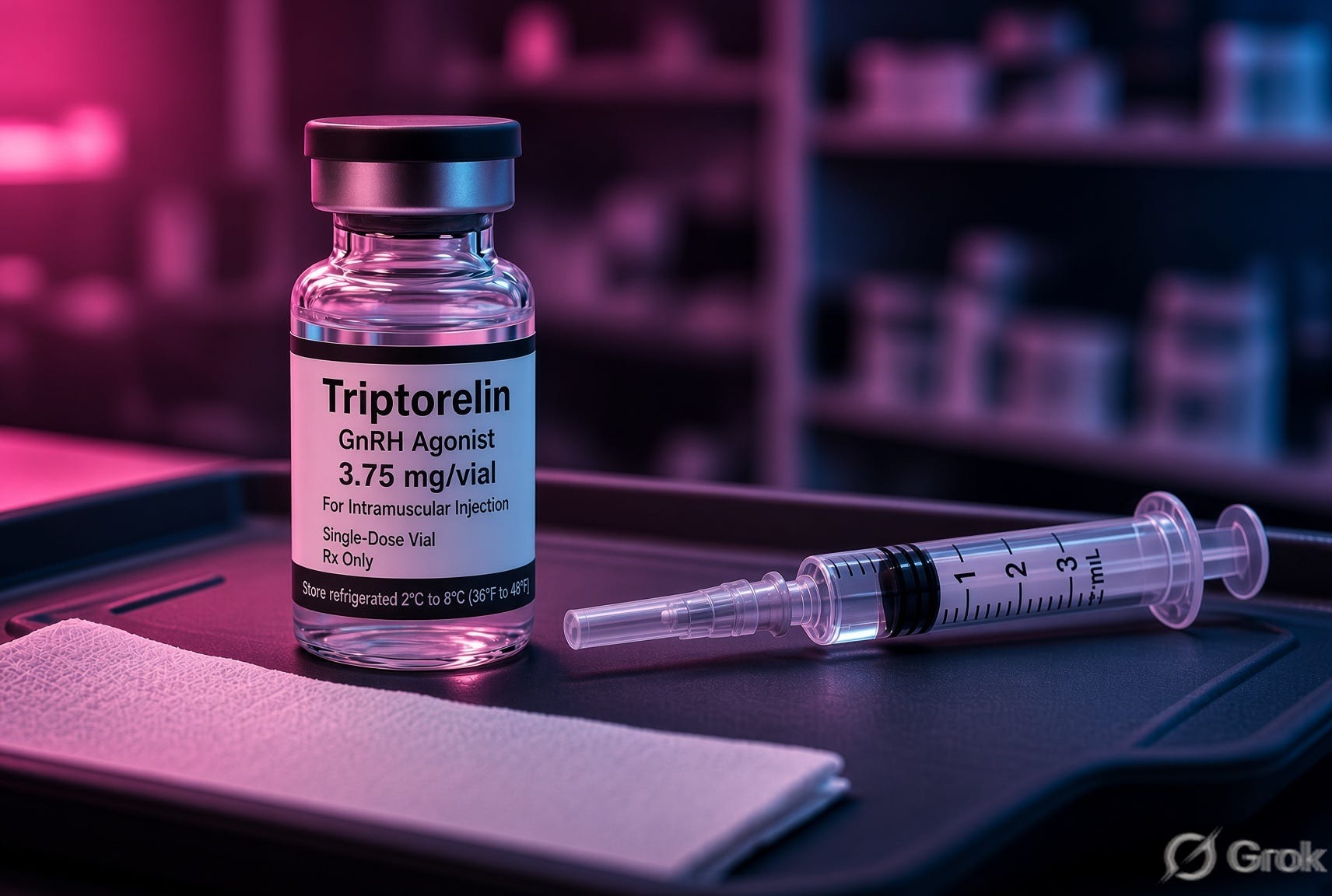
After an emergency “out-of-session” meeting on July 30, Australia’s federal Pharmaceutical Benefits Advisory Committee (PBAC) has recommended that the puberty blocker Triptorelin be given “unrestricted” status on the PBS. An unrestricted drug attracts a federal subsidy “for any therapeutic use”. The PBAC recommendation requires the approval of Minister Butler.
Asked if puberty blockers will be made available on the PBS, Mr Butler’s department did not answer directly, but a spokesperson said the PBAC had recommended unrestricted listing of Triptorelin “to support its use in the treatment of other conditions, including breast cancer and endometriosis, and [to] help address the imminent de-listing of [another hormone suppression drug], Goserelin 3.6mg (Zoladex), from the PBS”.
The PBAC itself cited the need to cover “a number of women’s health conditions” following news that Goserelin was being withdrawn from the market by its manufacturer for commercial reasons. Hormone suppression can help stop breast cancer cells from growing.
With trans-identifying minors, puberty blockers are used to stop their normally timed development. These remain “off-label” prescriptions, meaning the drugs have not been approved for this use by the regulator, the Therapeutic Goods Administration. By contrast, blockers are licensed for use with precocious puberty, when a child goes into puberty prematurely.
Without a PBS subsidy, Triptorelin would cost up to $3,168 for a year’s supply on private prescriptions of the kind that Dr Bisshop and others have been writing. The cost of puberty blockers has been subsidised by the gender clinics of state-run children’s hospitals. This use of blockers has been promoted, without robust evidence, as a potentially “life-saving” mental health intervention for trans-identified minors.
There is no comprehensive data on this use of puberty blockers, so it is not possible to calculate the impost of any cost-shifting from the states to the Federal Government.
In its recommendation earlier this month, the PBAC referred to Triptorelin being used with unspecified “women’s health conditions”. It did not make any reference to the drug being prescribed for gender dysphoria or gender incongruence.
The drug being withdrawn, Goserelin 3.6mg, was restricted to carcinoma of the prostate, endometriosis, breast cancer, and anticipated premature ovarian failure. It is unclear if other relevant conditions in women’s health were not covered. Nor is it clear why Triptorelin warranted an unrestricted status, rather than modifying its restriction to limit extra coverage to specific women’s health conditions.
“The PBAC advised that an unrestricted listing [of Triptorelin] would align with contemporary and evidence-based clinical practice,” the expert committee said in its “outcome details”.
“The PBAC advised that a review of Triptorelin 3.75 mg utilisation should be completed around two years after the amendment to the PBS listing to determine whether there are any changes to the expected utilisation.”
The agenda for the July 30 meeting said: “The PBAC has already received a significant number of clinical and consumer inputs from a range of organisations and individuals in relation to this matter. Given the timing of the meeting, further public consultation will not be possible to be undertaken.”
It is unclear whether LGBTQ+ or trans medical lobbies were among those “consumer inputs”.
Gender clinicians have reportedly been using the diagnosis of “androgen deficiency, testicular disorder” to access PBS-funded testosterone for trans-identified teenage girls who wish to masculinise their bodies.
🤯🤯🤯 Gender clinicians have reportedly been using the diagnosis of “androgen deficiency, testicular disorder” to access PBS-funded testosterone for trans-identified teenage girls who wish to masculinise their bodies 🤯🤯🤯
Brisbane GP Fiona Bisshop, a past president of the lobby group, the Australian Professional Association for Trans Health, said on Facebook.
“Trans youth deserved some good news, and this is the best in a long time!” One comment on her post says: “Awesome, life-saving stuff”.
…..And now for the bad news, a very brief summary of nine long-term post transition studies, all referenced studies are readily accessible on the internet:
1. Amsterdam Cohort of Gender Dysphoria Study (1972–2017)
Key Finding: While suicide risk in transgender individuals is higher than in the general population, this risk remains consistent across all stages of transition.
2. Long-Term Follow-Up of Transsexual Persons in Sweden (1973–2023)
Key Finding: sex reassignment surgery exhibited substantially higher risks of mortality, suicidal behaviour & psychiatric conditions c/f the general population.
3. Suicide Mortality Among Adolescents in Finland (1996–2019)
Key Finding: Gender dysphoria alone did not predict mortality or suicide among adolescents referred to gender clinics. Psychiatric comorbidities were the primary predictors of mortality & medical gender reassignment didn’t mitigate suicide risk.
5.Examining gender-specific mental health risks after gender-affirming surgery: a national database study
Key finding: From 107,583 patients, matched cohorts demonstrated that those undergoing surgery were at significantly higher risk for depression, anxiety, suicidal ideation, and substance disorders than those without surgery
6. Mortality trends over five decades in adult transgender people receiving hormone treatment: Amsterdam cohort of gender dysphoria
Key Finding: An increased mortality risk in TG people using hormone treatment, regardless of treatment type. This increased mortality risk did not decrease over time
7. Transition as Treatment: The Best Studies Show the Worst Outcomes
Key Findings: Total mortality was 51% higher than in the general population, mainly from suicide, AIDS, CVS diseases, drug abuse and unknown causes
8. Risk of Suicide and Self-Harm Following Gender-Affirmation Surgery
Key Finding: Patients who have undergone gender-affirming surgery are associated with a significantly elevated risk of suicide, highlighting the necessity for comprehensive post-procedure psychiatric support.
9. Misrepresentations evidence in “gender-affirming care is preventative care
Key Finding: If claim such as “Gender-affirming care is preventative care” are to be published in highly influential medical journals, it is of paramount ethical importance that they are accompanied by accurate, transparent, verifiable, and honest interpretations of the evidence used to support them. Without this,